WWP December 3, 2025 | e-News
HOWTO Grant Closes – Three Years and Moving Forward
In June of 2025, Willamette Workforce Partnership (WWP) successfully concluded its HOWTO grant agreement with the Oregon Health Authority (OHA) and Oregon Health & Science University (OHSU). Even before the COVID-19 pandemic, Oregon’s behavioral health workforce faced growing patient demand and critical staffing shortages. With this three-year grant, WWP set out to tackle one of Oregon’s most urgent and complex healthcare challenges.
WWP identified three main core goals to support Oregon’s behavioral healthcare workforce:
- Build a Regional Consortium – Form a strong partnership of employers, educators, and healthcare organizations across the Mid-Willamette Valley.
- Launch Collaborative Solutions – Develop shared action plans and implement short-term strategies to address hiring and training needs.
- Grow and Diversify the Workforce – Increase the number of behavioral health professionals, with a focus on equity and access.
Over the course of the grant, the Mid-Valley Behavioral Health Consortium, Willamette Care Connects (put logo somewhere in here), made measurable progress in aligning education and employment pathways, with 87% of participants reporting stronger coordination across schools, training providers, and employers. Awareness among students and job seekers rose significantly, and 75% of partners saw meaningful growth in collaboration between education and workforce organizations. While challenges remain, the Consortium created lasting infrastructure, opened new career pathways, and sparked critical conversations that many participants said were happening for the first time.
WWP is especially grateful to OHA and OHSU for trusting our team to lead this important work and for their support in advancing a stronger, more accessible behavioral health workforce in Oregon.
Career Supports for
Behavioral Health Professionals
Willamette Workforce Partnership (WWP) is proud to collaborate with Yamhill Community Care (YCCO) on grant funding designed to strengthen the region’s behavioral health workforce. Through the Workforce Supports for Yamhill County Future Clinician Behavioral Health Practitioners training grant program, WWP is helping to expand access to training, financial support, and professional development for current and future practitioners. In just over one year, WWP has provided over $30,000 to local grant recipients pursuing tuition assistance, post licensure certifications, and a wide variety of practice materials.
“We believe that this program will not only increase the number of qualified BH practitioners, but also ensure that they represent the diverse community we serve,” added Kim Parker-Llerenas, Executive Director at WWP.
While the grant application closes on December 31st, there is still funding to distribute! Applicants must live in Yamhill County and be working toward certifications and/or degrees for a career in behavioral health, including substance use recovery, and/or mental health. Please share this opportunity with individuals interested in participating.
The application is linked below.
YCCO Support Grant Brings Community Resource Advocate to Local WorkSource Center
WorkSource Oregon centers across the Mid-Willamette Valley are seeing more customers who are navigating complicated challenges like housing instability, addiction, and behavioral or mental health needs. To better support these individuals, a new initiative is underway, creating clear referral pathways that link WorkSource teams with behavioral health providers in Marion, Polk, Yamhill, and Linn Counties.
When a customer walks through the WorkSource center doors in crisis, staff should know exactly who to call, how to connect them, and what resources are available. These pathways will be documented for all center staff and shared through LUCAS, a resource-based virtual platform used by frontline staff. The initiative has identified a Community Resource Advocate and includes a review of current de-escalation and safety training to see where improvements or updates may be useful.
“…Julia has been hard at work building referral pathways to partner providers in Behavioral and Mental Health in the Mid-Willamette Valley. Julia’s persistence has resulted in multiple meetings with providers in the region as well as identified next steps for customer referrals. Julia also has identified potential de-escalation training for center teams that is being reviewed by center leadership.”
Ricque Smith, WorkSource Oregon and Oregon Employment Department’s Area Manager, provides some detail about the Community Resource Advocate in place, Julia Aleman.
Many thanks to the behavioral workforce support grant from Yamhill Community Care (YCCO) for funding the Community Resource Advocate!
Healthcare Sector Launch Recap

Late last month, Willamette Workforce Partnership brought together healthcare employers, educators, practitioners, and partners for a Healthcare Sector Launch. The event built on the progress of the Mid-Valley Behavioral Health Consortium. Julie Guenette, WWP’s Healthcare Workforce Strategist, and Dean Craig, WWP’s Business Services Director, coordinated the launch with strategic direction from Heidi East McGowan.
The purpose of the gathering was to create a shared vision for addressing inefficiencies and persistent challenges within the regional healthcare system. Leaders from across the industry and public sector to came together to formally initiate the partnership and outline its early priorities.
The following committees emerged from the launch to guide collaborative work going forward:
- Access
- Advocacy
- Collaboration
- Workforce, Recruitment & Retention
Connection to MVBHC
Many of the same issues identified through the Mid-Valley Behavioral Health Consortium are also showing up across the broader healthcare system. Because the challenges are similar, the collective group can use what it has already learned to work together and plan the next steps more effectively.
WWP’s Role Moving Forward
WWP looks forward to supporting these partners and strengthening the relationships needed to address the complex challenges facing the healthcare sector.
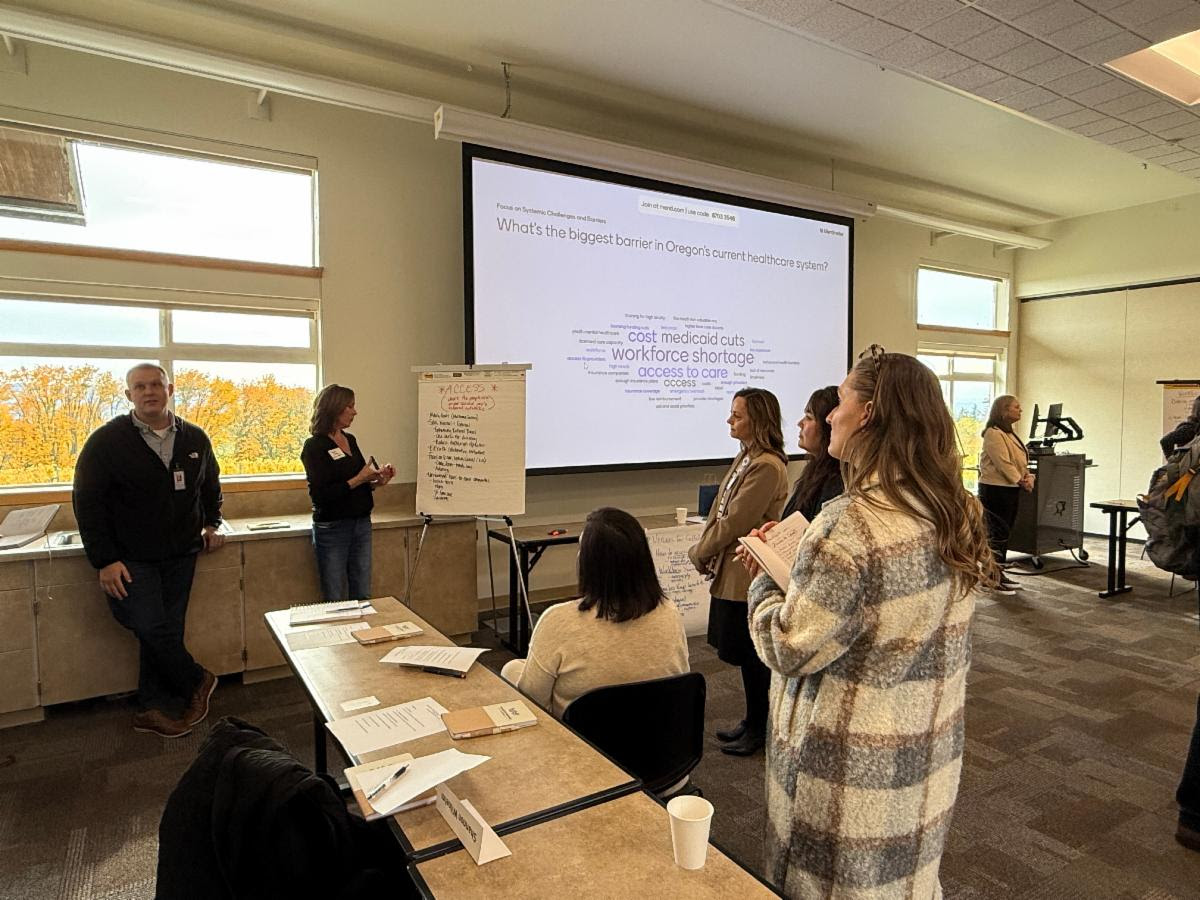
The launch marks the beginning of a coordinated effort to improve outcomes for providers, organizations, and the communities they serve.