WWP August 21, 2025 | e-News
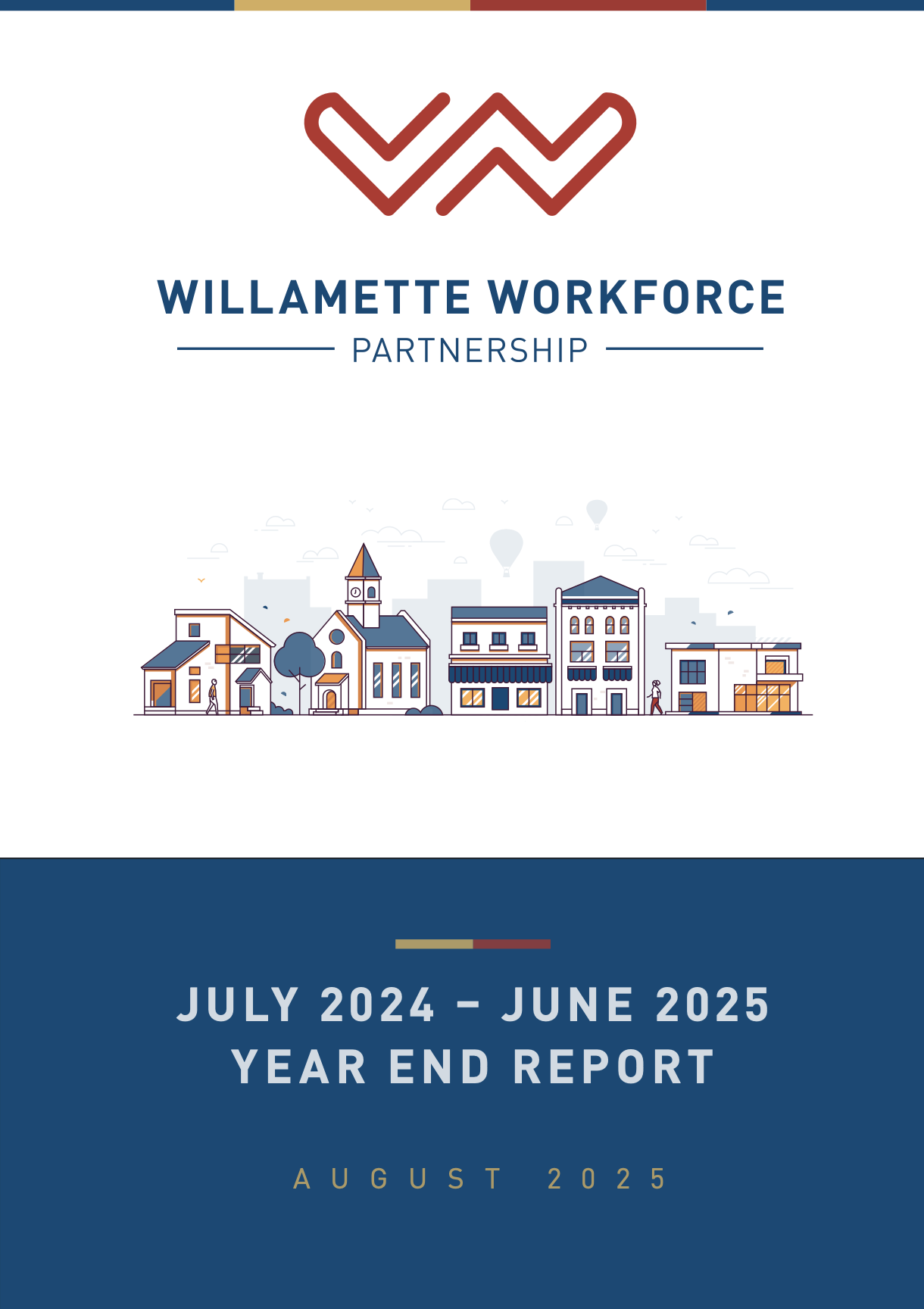
July 2024 – June 2025 Year End Report
Inside the pages of our Willamette Workforce Partnership’s Year End Report, you’ll discover the strategic investments, bold initiatives, and measurable outcomes that defined our impact across the Mid-Willamette Valley this program year. From expanded youth programs and industry-driven training to new state and federal partnerships beyond WIOA, this report highlights how WWP continues to drive workforce innovation and community prosperity. We invite you to read the full report here or on our website.
As we reflect on the year’s milestones, our Executive Director shares her perspective on the future in a letter below.
Looking Ahead … A Letter from Kim Parker-Llerenas
WWP is ready to build on the momentum created in recent years. Programming now reaches more individuals and organizations, while sector partnerships deepen and the organization’s role as a trusted workforce leader across the Mid-Valley grows stronger. With a solid foundation, WWP is positioned to continue delivering responsive, community-centered solutions in an evolving economic and workforce landscape.
Technologies such as artificial intelligence and automation are reshaping how people live, work, and connect. While the future workforce cannot be fully predicted, one certainty remains: communities that are agile, innovative, and collaborative will not only adapt to these changes but will lead them.
The priority is clear: protect what works, anticipate what is shifting, and lead with both innovation and financial discipline. By doing so, WWP will continue leading through workforce challenges and opportunities with resilience and foresight.
This next year demands focus, adaptability, and swift response. Several of WWP’s current funding streams will sunset by June 2026, and questions remain about the long-term direction of WIOA at the federal level. WWP approaches this moment with strong partnerships, proven outcomes, and transparent communication which all offer a steady compass. At the same time, thoughtful planning and strategic forecasting is essential.

WWP’s Annual Kickoff Training Focuses on the Future
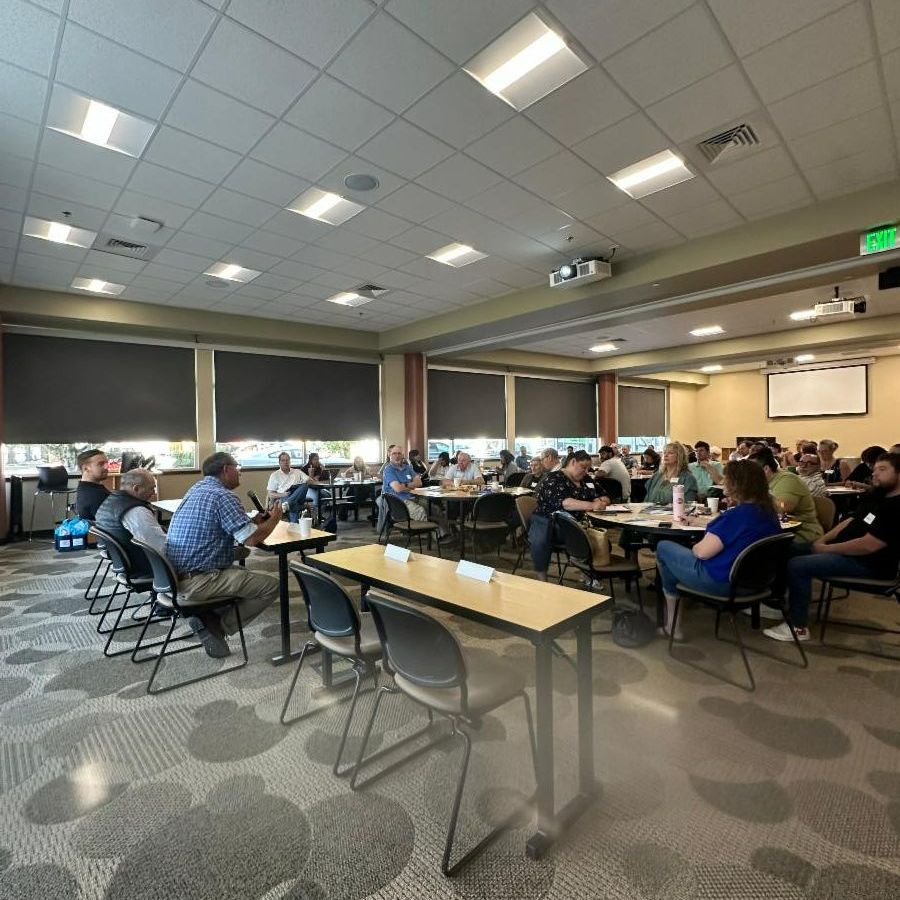
Earlier this month, Willamette Workforce Partnership (WWP) convened its 2025 Annual Kickoff focused on practical tools, local employer partnerships, and what’s ahead for our region’s workforce.
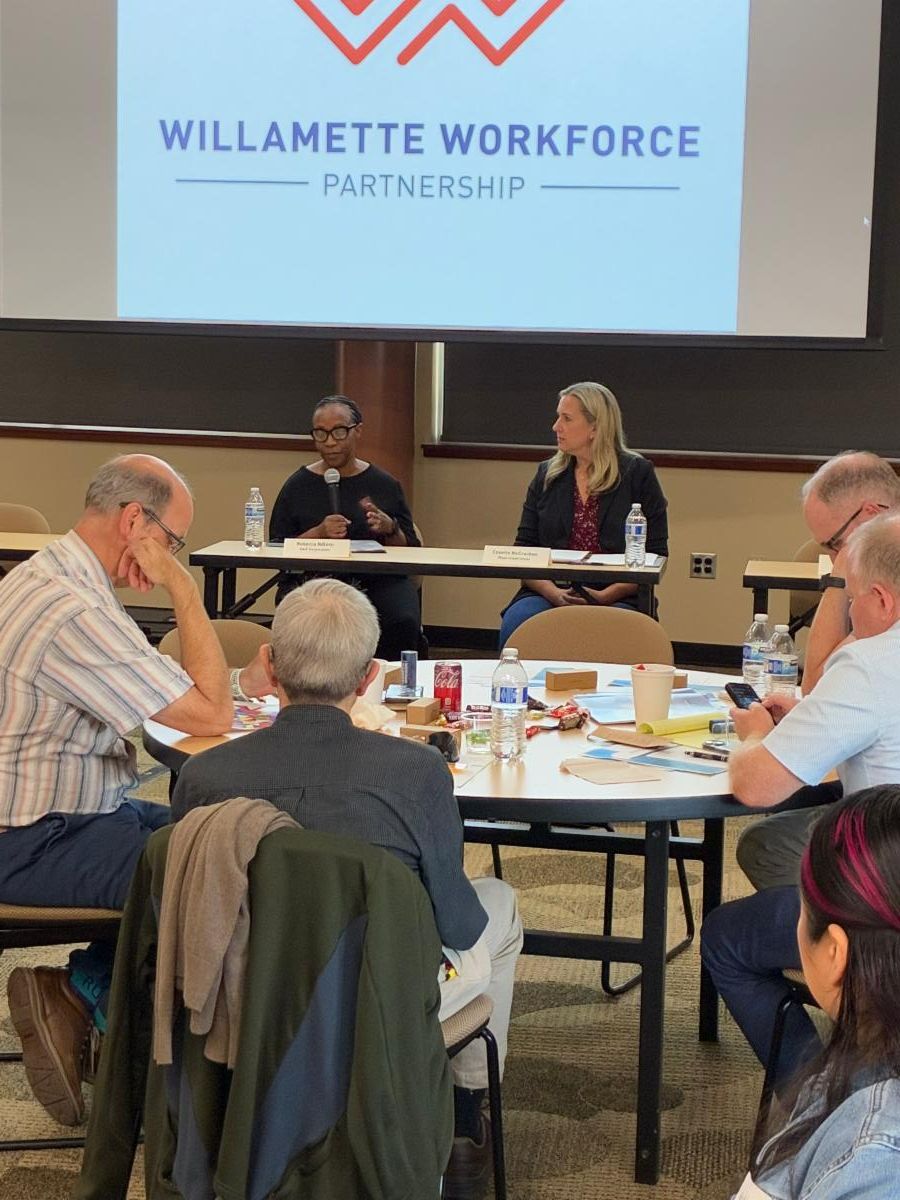
Day 1 brought together two groups that don’t always sit in the same room: employers who hire our local workforce and the workforce development professionals who guide job seekers toward those opportunities. WWP’s goal was to find out how local employers might characterize a quality job and how that aligns with what workforce development professionals are hearing from their jobseekers. What does a quality job mean to both the employer and the jobseeker and where do those definitions overlap?
Our panel of Mid-Valley employers, representing industries like warehousing, healthcare, and professional services, defined their quality jobs as work that provides fair wages, benefits, stability, skill-building, and a work space where people feel engaged and supported.
WWP and its partners use six pillars to characterize a quality job: self-sufficiency wages, safe working conditions, predictable hours, comprehensive benefits, accessible hiring practices, training and advancement opportunities.
What we found after spending the day with the combined group was the definition of a quality job consistently centers on fair pay, stability, safe and supportive workplaces, and opportunities to learn and grow.
That shared understanding gives WWP a strong foundation to keep building pathways that connect people with good employment opportunities.
Day 2 of WWP’s Annual Kickoff focused on technology updates, and how the workforce development world can use AI to better serve their clients.
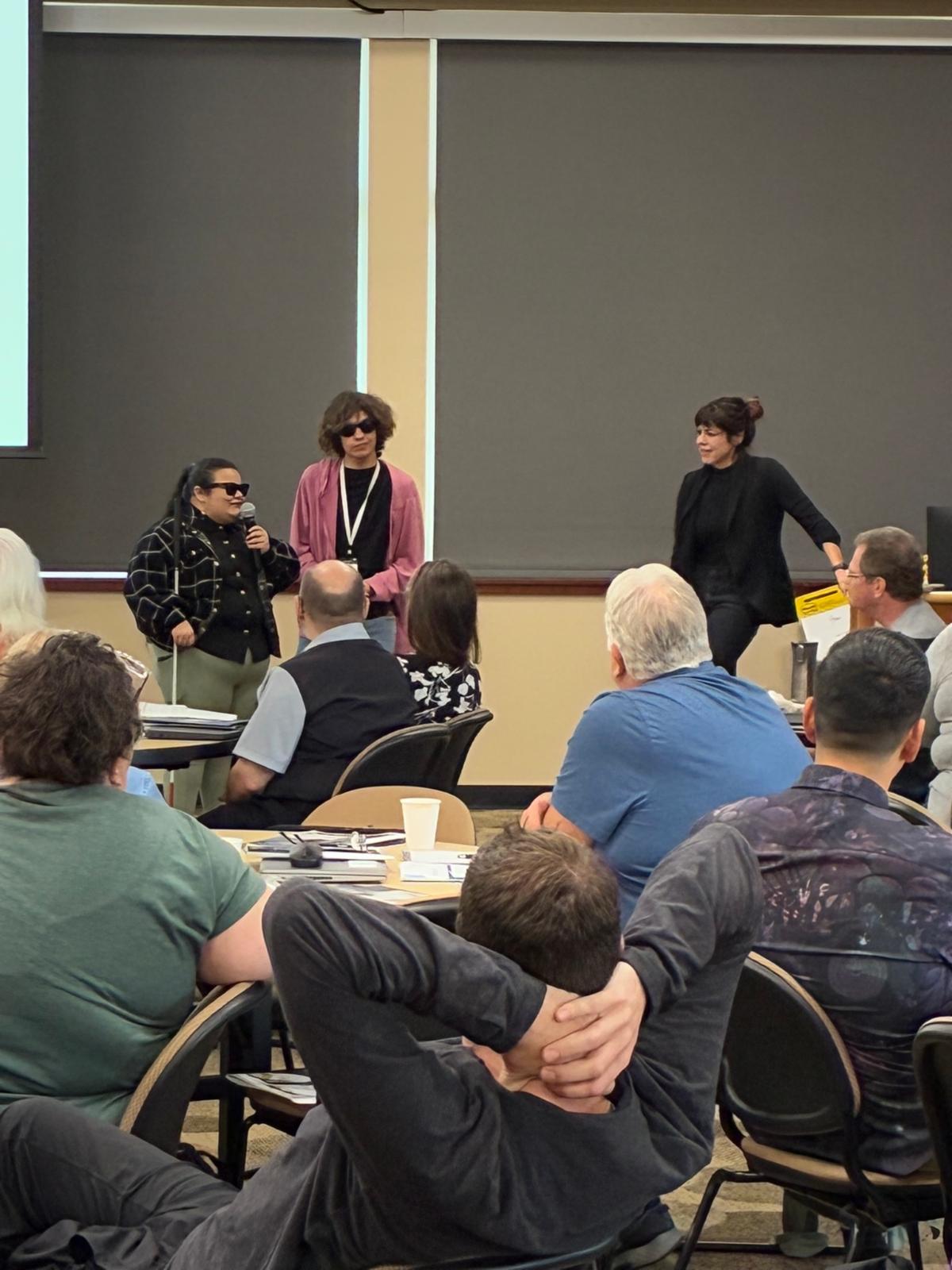
One of the most memorable moments of the day came from a few young, visually impaired visitors in the room. Oregon Commission for the Blind students, interning at the Higher Education Coordinating Commission (HECC), shared their lived experiences with accessible technology, and demonstrated how AI-enabled tools are leveling the playing field for them. Emily and Micah demonstrated their Ray-Ban Meta glasses, which use computer vision to recognize objects, read text aloud, and describe a user’s surroundings in real time. For individuals with vision impairments or processing differences, tools like these AI powered glasses are liberating and create a strong sense of autonomy.
As AI reshapes the landscape of work, WWP remains committed to ensuring that advances in technology don’t leave our workforce behind.
WWP is focused on creating training opportunities, like our Annual Kickoff, to introduce our partner agencies to AI, getting them familiar with using it, and understanding how AI might impact their clients in positive ways.
Are We Ready for AI?
The publication Work Ready AI from Willamette Workforce Partnership is a short, forward-thinking magazine designed to introduce the public and folks in the workforce development world to the opportunity and urgency of preparing the workforce for artificial intelligence (AI). In just a few engaging pages, it explains how AI is already transforming jobs across sectors. It calls on community leaders, educators, and employers to act to ensure local workers aren’t left behind. The magazine makes a strong case that workforce readiness is not just about technical skills but also access and adaptability.
Why read it? If you care about the future of work in Oregon’s Mid-Willamette Valley or know of any organization struggling with automation and digital disruption, the magazine gives you a fast, smart overview of what’s coming and how to prepare. It’s especially helpful for people in education, workforce development, economic development, or policymaking who want to align their strategies with future labor market demands.
Are We Ready? is a theme throughout the piece, inviting readers to move from awareness to action. Click the image below to find a digital link to the magazine and if you are interested in hard copies, please contact [email protected].
The age of AI isn’t coming…it’s already here.
The real question is: are we ready?